Keep a starter alive
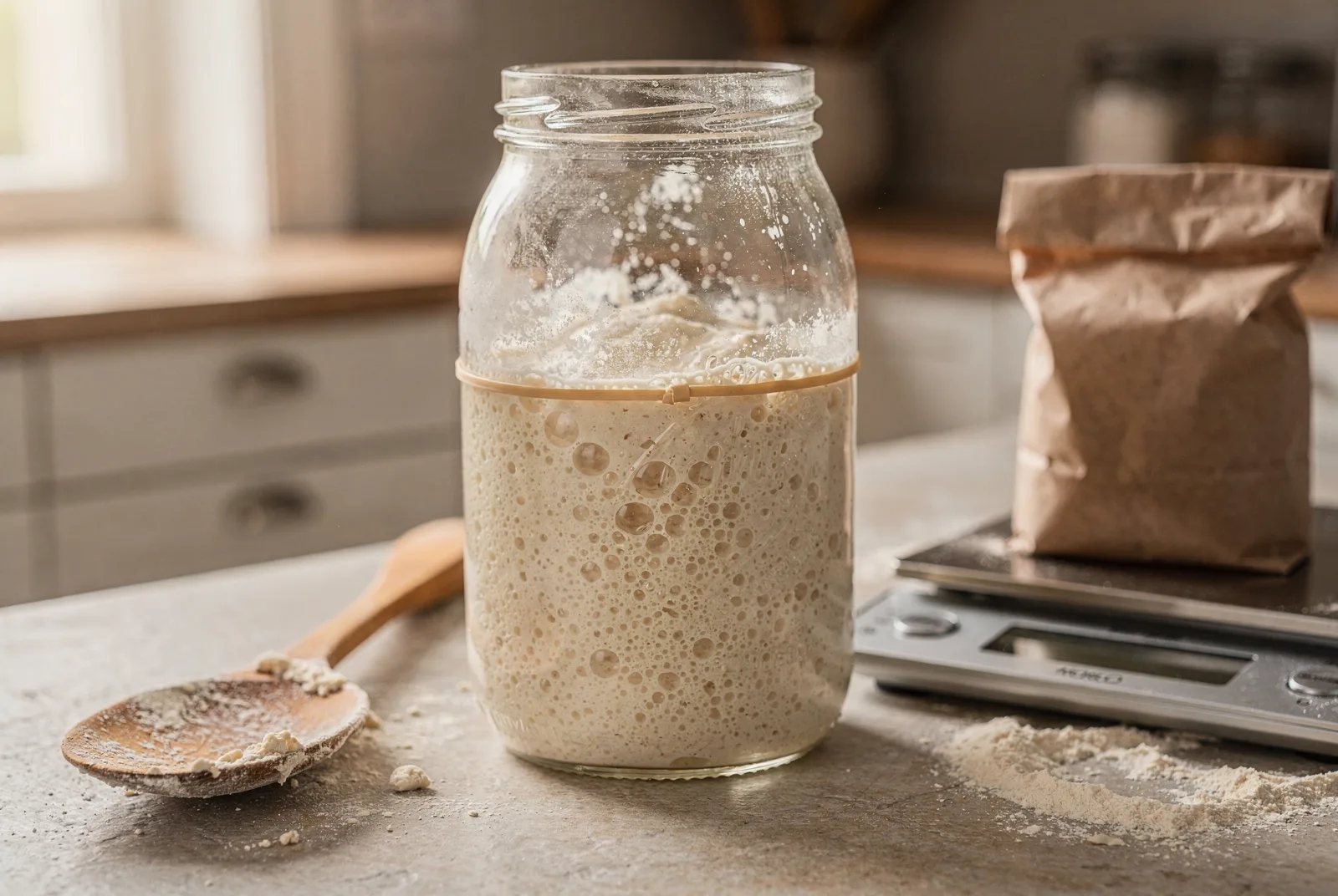
- Feed once a day at room temperature: 1 part starter, 1 part flour, 1 part water by weight, for example 50 g each.
- Use a clear jar and a rubber band to mark the level after feeding, so you can see the rise.
- Ready means doubled, domed and full of bubbles, usually 4 to 8 hours after feeding.
- Baking once a week? Keep the jar in the fridge and give it two feedings at room temperature before you bake.
Shape with tension
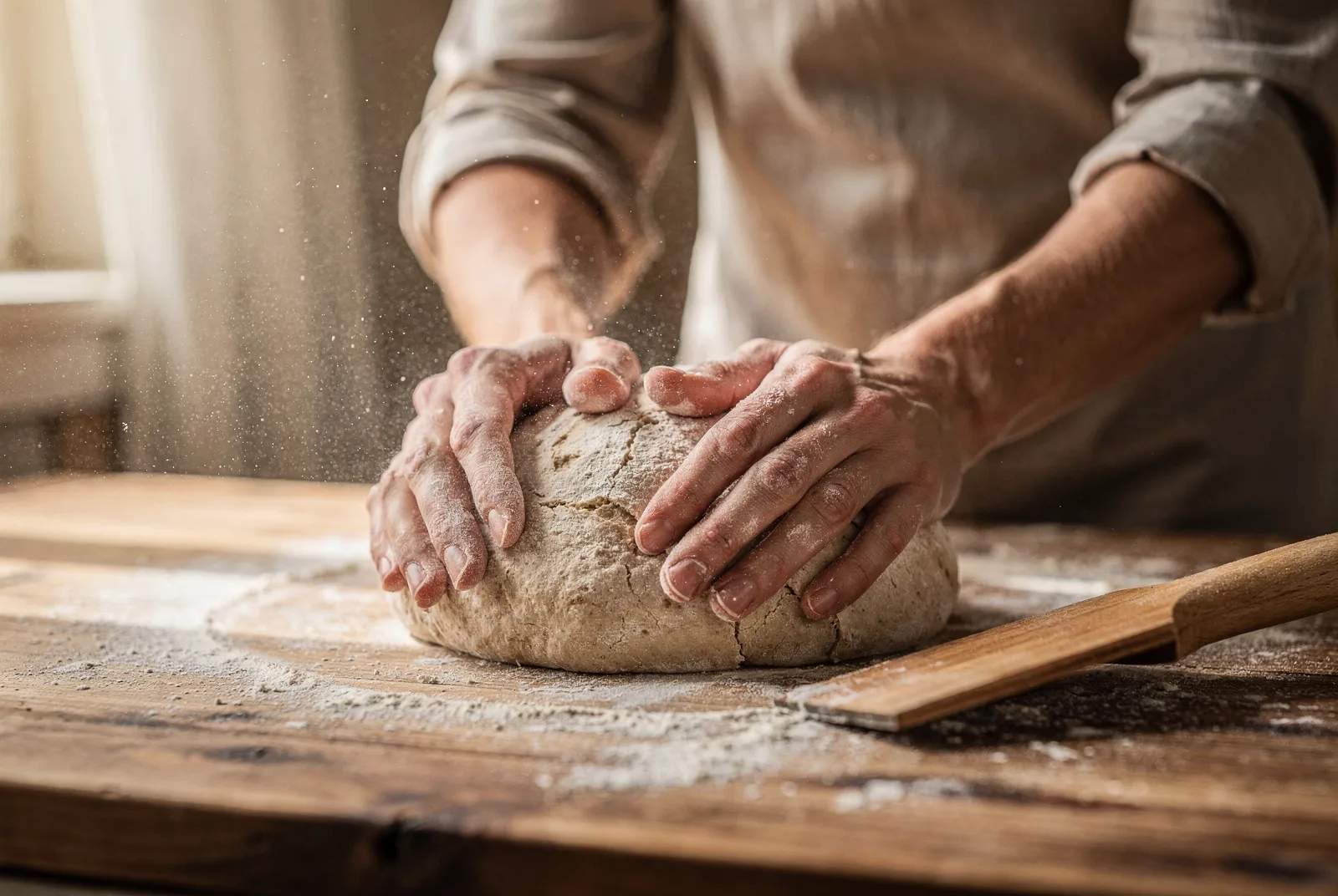
- Turn the dough out onto an unfloured counter and pre-shape it into a loose round with a bench scraper.
- Let it rest 20 to 30 minutes uncovered until it relaxes.
- Flour the top, flip it, fold the sides in like a letter, then roll it toward you to build surface tension.
- Place it seam side up in a floured basket and cover it for the cold proof.
Bake and read the crumb
- Preheat a lidded cast iron pot at 480°F for 1 hour. Use oven mitts: the pot and lid get extremely hot.
- Turn the cold dough onto parchment, score one confident line and lower it into the pot.
- Bake 20 minutes with the lid on for steam, then 20 to 25 minutes without it until deep brown.
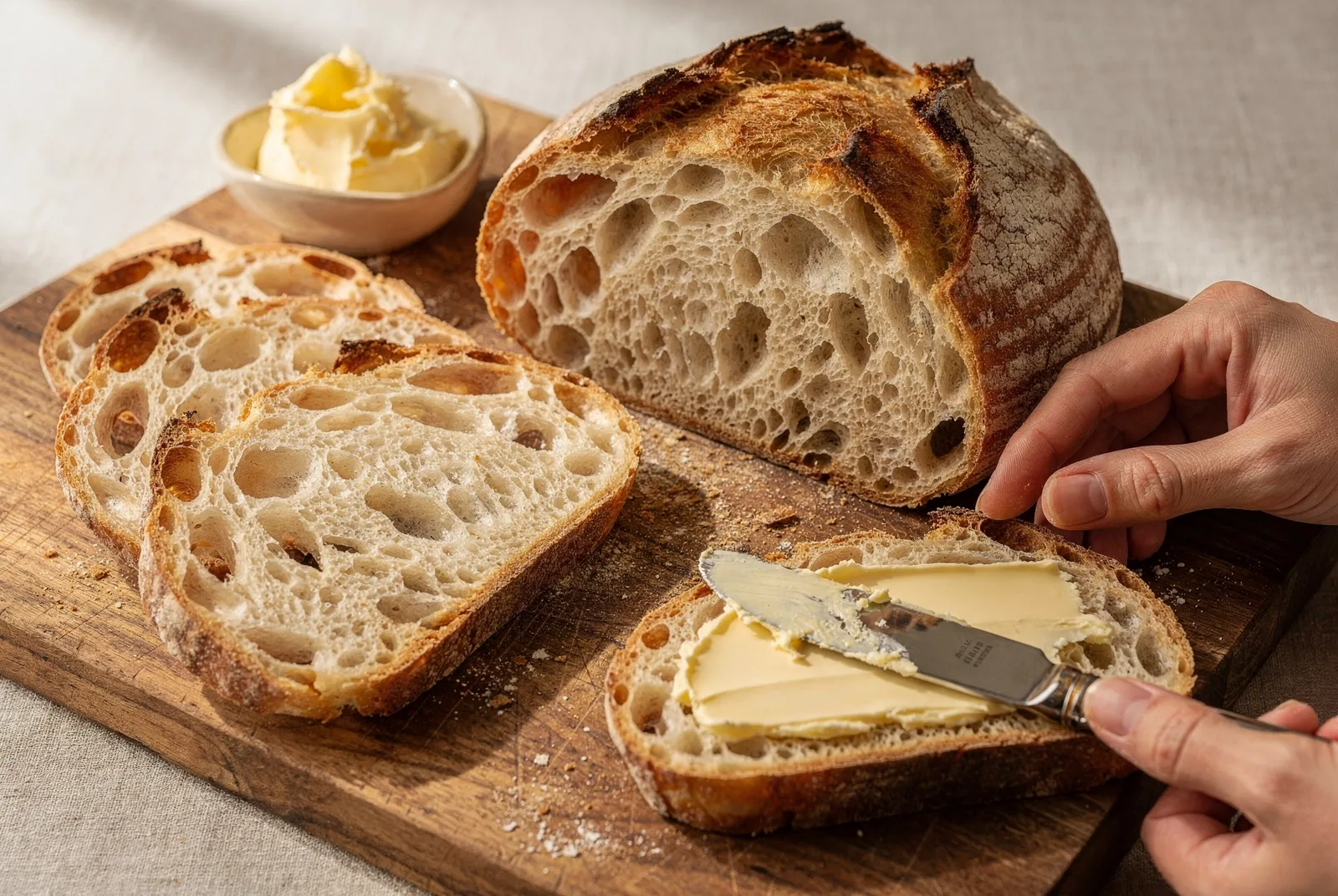
- Large uneven holes under the crust point to underproofing; a dense, flat loaf usually means it went too long.